
This post is to accompany our latest YouTube video – The Geordie Butcher whose Radioactive Uranium Glass Conquered the World – where we explore major locations around Tyneside to discover the legacy of the Geordie Glassmaker – Geo Davidson.
The Butcher with a Radiant Secret
Picture this: a primrose‑yellow sundae dish on a kitchen table, bathed in ultraviolet light, suddenly flickering into a bright, fluorescent green. That’s the magic of George Davidson’s glass, and the story behind it begins in 1867, when a Gateshead butcher traded sausages for science and launched a legacy that still glows in the dark. George Davidson wasn’t just any butcher – he was a builder, a tinkerer, and eventually one of Britain’s most successful glassmakers, earning him the retrospective nickname of the “Oppenheimer of Victorian tableware.”
The Oppenheimer moniker is a nod to his knack for turning raw material into a dazzling product that could outshine even the most famous German glassworks of the era.
“George Davidson wasn’t just any butcher and builder; becoming one of the most successful glassmakers in British history.”

1867: Forging an Empire in the Team‑Valley
George saw an opening: paraffin‑lamp chimneys were the talk of the town, but the local market was still under‑served. He founded the Teams Glass Works in the heart of the Team‑Valley, turning the region’s abundant coal into a new kind of household staple.
Why Gateshead? The valley’s deep coal seams meant cheap, reliable fuel for the furnaces, and the valley’s growing population meant a steady stream of customers eager for a new kind of glass.
“By the late 19th century, Davidson’s was the biggest pressed‑glassworks in the country.”
Mass production was the name of the game: by the 1880s, the Teams Glass Works was churning out 20,000 pieces per week—a figure that still surprises modern glass‑makers who can’t quite keep up with the North‑East’s demand for dazzling dishes.
“At its peak, the factory churned out 20,000 pieces weekly, shipping to Australia and India.”

1867: Forging an Empire in the Team‑Valley (continued)
- Strategic pivot: George’s first big decision was to pivot from butcher to builder, adding a new line of paraffin‑lamp chimneys that would become the cornerstone of his glass‑making empire.
- Why Gateshead? The valley’s coal‑rich geology provided cheap, high‑temperature heat for his furnaces, while the town’s growing population offered a steady stream of buyers for his new glassware.
- Mass production: By the late 19th century, Davidson’s was the biggest pressed‑glassworks in Britain, a title that earned him the nickname of the “Oppenheimer of Victorian tableware.”

The Science of Pearline: “A Victorian Glowstick”
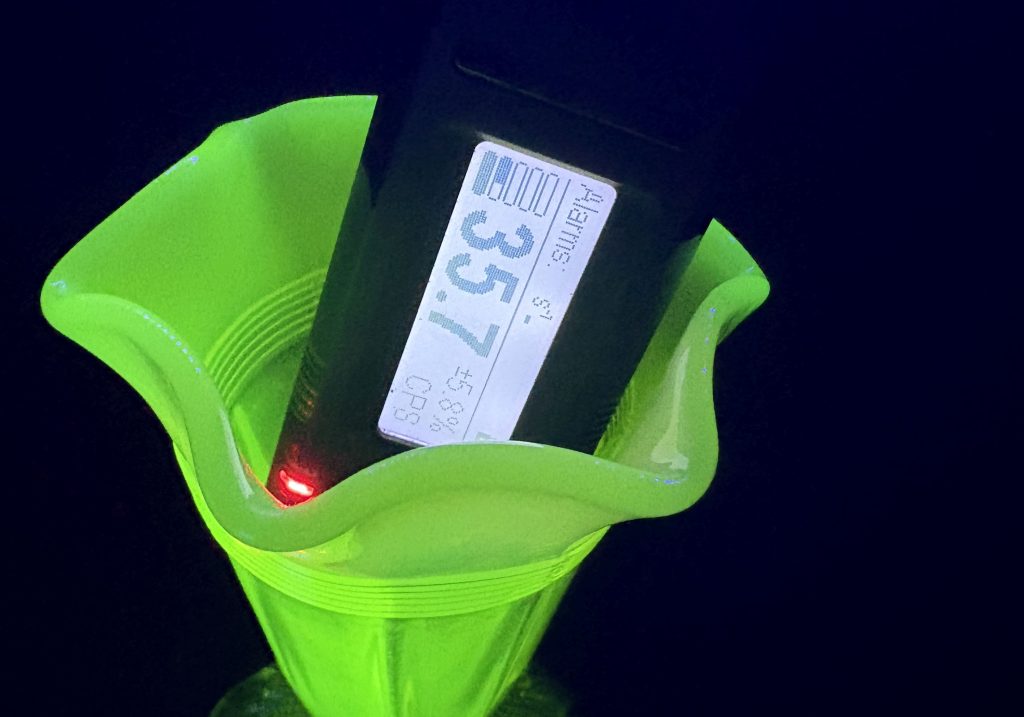
In 1889, Davidson introduced Pearline glass – a new type of “glowstick” that would become a household name in the North‑East. The secret sauce? A spicy recipe of uranium oxide (0.5‑2 % by weight) that gives the glass its unique UV‑responsive green glow.
Modern tests show that his glass can register 5 microsieverts on a Geiger‑counter, a figure that puts it on par with the best of the world’s high‑tech glassmakers.
Global Trade and Unusual Barters
The Teams Glass Works was a global player: 20,000 pieces per week were shipped to Australia and India, and the firm even managed a quirky barter deal – trading a load of glass for a shipment of Australian butter, a move that gave the valley a new taste for dairy and glass alike.
But the story doesn’t end there. George’s son, Thomas Davidson, kept the legacy alive into the 20th century, introducing innovations like Cloud Glass that would keep the valley’s glassworks competitive long after the original furnaces had cooled.
“Thomas Davidson’s later 20th‑century innovations like Cloud Glass.”

End of an Era and Collector’s Craze
After a century of hard work, the furnaces went cold in 1987, marking the end of an era for the Teams Glass Works. Yet the legacy lives on: the glass is now considered a Geordie Gold treasure, and collectors can still find Pearline cake stands selling for over £100.
The “radioactive fingerprint” of Davidson’s glass – its UV‑responsive glow and high‑count readings – has made it a prized commodity for chefs, historians, and science‑hungry folks alike.
Conclusion: A Legacy Still Burning Hot
If you’re curious to see George Davidson’s glass in person, head over to the Laing Gallery in Newcastle – the perfect place to taste the history of Geordie glass, one UV‑lit dish at a time.
From butcher to builder to glass‑maker, Davidson’s story is a testament to the power of local entrepreneurship and a little bit of science.
Cheers to George Davidson, the original glass‑Oppenheimer of the North‑East!
