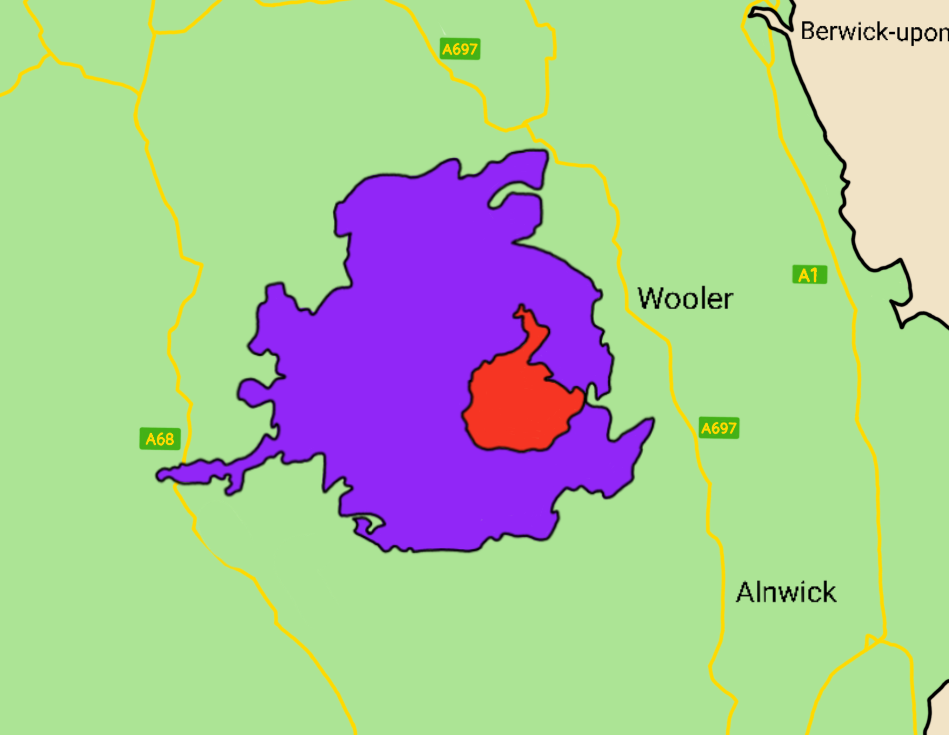
When you think of the Cheviot Hills, you might picture rolling green landscapes, peat-covered plateaus, and the serene beauty of the England-Scotland border. But beneath this tranquil surface lies a geological treasure trove that’s sure to excite anyone with an interest in radioactive minerals and Earth’s hidden histories. Let’s uncover why the Cheviot Hills are a fascinating destination for rockhounds and science enthusiasts alike.
A Geological Wonderland
The Cheviot Hills are a range of gentle, peat-covered mountains over 700 meters above sea level, with a surprisingly dramatic past. Their geology is dominated by igneous rocks—rocks formed from cooled magma or lava—including andesitic and rhyolitic lavas, which are specific types of volcanic rock. At the heart of the hills lies a central granite intrusion known as the Cheviot Granite. This granite isn’t just any rock—it’s a high-level pluton, meaning it formed from magma that cooled and solidified relatively close to the Earth’s surface. This process provides important clues about the area’s volcanic activity and the tectonic forces that shaped the landscape over millions of years.
But what makes this particularly interesting for radioactive mineral hunters? Granites are often associated with natural radioactivity due to the presence of minerals like uranium, thorium, and potassium-40. While the Cheviot Granite hasn’t been widely mined for these elements, its formation and the hydrothermal activity in the region make it a promising area for exploration.
A Volcanic Past with Radioactive Potential
During the early Devonian period—a time around 400 million years ago—the Cheviot Hills were home to a subaerial volcano, meaning it was a volcano that erupted on land rather than underwater. The eruptions produced layers of agglomerate (a mix of volcanic fragments and ash) and breccia (a rock made of broken pieces cemented together), as well as lava flows, creating a complex geological foundation. Later, the intrusion of the Cheviot Granite caused thermal metamorphism—a process where heat from the molten granite changed the surrounding rocks, leading to the formation of hornfels, a tough, fine-grained metamorphic rock that often contains interesting mineral deposits.
This volcanic and intrusive activity also set the stage for hydrothermal alteration, a process that can concentrate radioactive minerals. Hydrothermal fluids, rich in dissolved elements, can deposit uranium and thorium-bearing minerals in fractures and voids within the rock. While documented occurrences of radioactive minerals in the Cheviot Hills are rare, the geological conditions suggest there’s potential for discovery.
Glacial Clues and Mineral Traces
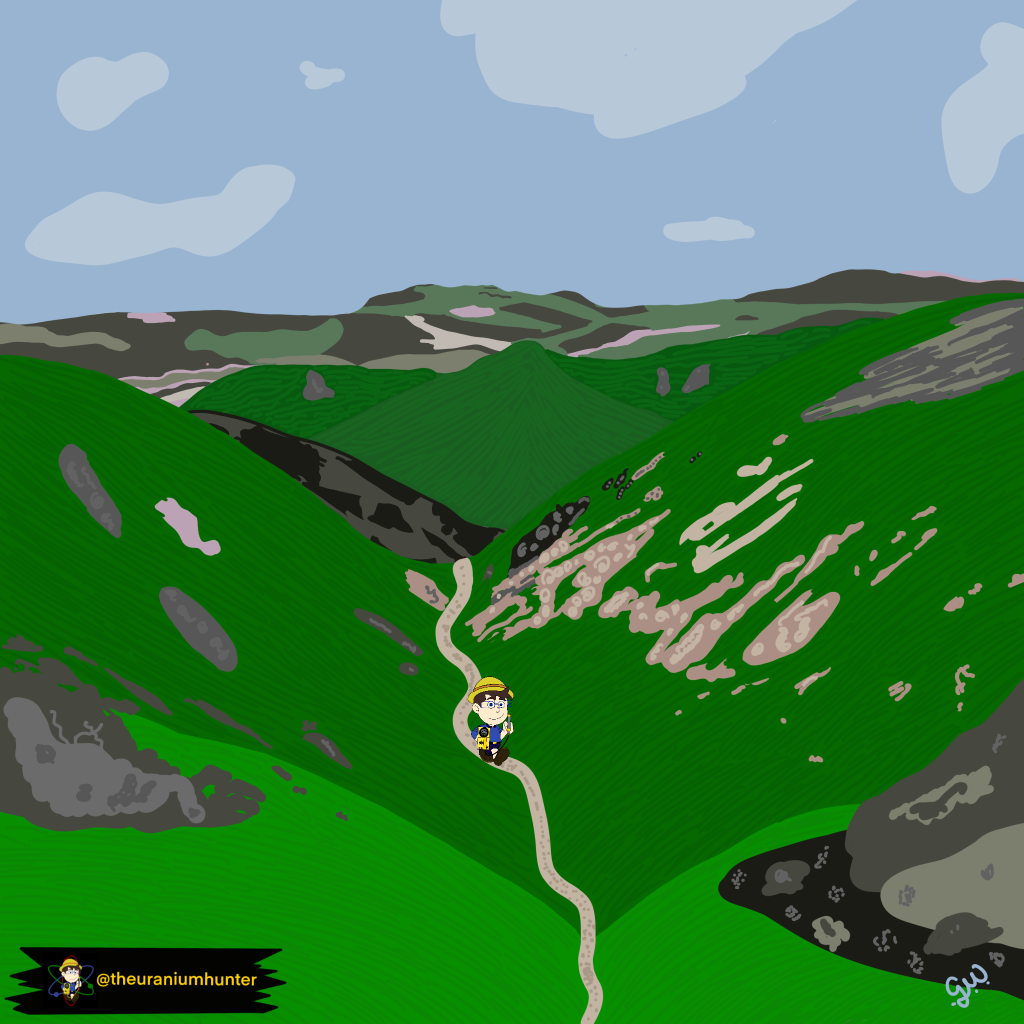
The Cheviot Hills were shaped by glaciers during the last Weichselian glaciation—a period of widespread glaciation that occurred around 115,000 to 11,700 years ago. As the glaciers moved and melted, they left behind a layer of superficial deposits, which are loose materials like clay, sands, and gravels that cover the older, solid bedrock beneath. These deposits are a reminder of the powerful forces of ice that once sculpted the landscape. These deposits can sometimes contain erratics—rocks transported by glaciers from distant locations. For mineral hunters, erratics can be a fun way to discover rocks and minerals that aren’t native to the area, including those with radioactive properties.
Why the Cheviot Hills Matter for Radioactive Mineral Enthusiasts
While the Cheviot Hills aren’t traditionally known as a hotspot for radioactive minerals, their geological history makes them an intriguing area for exploration. Here’s why:
1. Granite Intrusions: Granites are often associated with uranium and thorium-bearing minerals. The Cheviot Granite, with its unique varieties and hydrothermal alteration, could host hidden treasures.
2. Hydrothermal Activity: The presence of hydrothermal alteration increases the likelihood of mineral deposits, including those with radioactive elements.
3. Glacial Deposits: The glacial history of the area means that unusual rocks and minerals could be scattered across the landscape, waiting to be discovered.
Exploring the Cheviot Hills
For those interested in radioactive minerals, the Cheviot Hills offer a unique opportunity to combine geology, history, and adventure. While you’re unlikely to stumble upon a uranium mine, the area’s volcanic and glacial features make it a fascinating place to explore. Remember to bring a Geiger counter or scintillometer—you never know what you might find!
The Cheviot Hills aren’t just for geologists or seasoned hikers—they’re a fantastic destination for anyone looking to explore stunning landscapes and uncover a bit of Earth’s history. Here are some easy ways to enjoy the hills, even if you’re not an expert:
Accessible Starting Points
- Wooler: Known as the “Gateway to the Cheviots,” this charming market town is a great base for exploring the hills. It’s just a short drive from popular walking routes, and you’ll find plenty of cafes and shops to fuel up before your adventure.
- Powburn: This quirky little town is a must-stop for visitors heading to the Cheviot Hills. It’s home to a unique combo of a petrol station, a serene lake, a caravan park, and an antique shop—perfect for refueling and relaxing before exploring. Powburn is also your last stop before turning off to the scenic Harthope Valley, making it a charming gateway to your adventure.
- Rothbury: Located to the east of the hills, Rothbury is another excellent starting point. It’s close to the Coquet Valley, which offers scenic walks and easy access to the lower slopes of the Cheviots.
- Hethpool: A small village nestled in the College Valley, Hethpool is a peaceful spot with easy access to gentle trails, Cheviot Goats and breathtaking views.
Easy Walks and Trails
- Harthope Valley: Just outside Wooler, this valley offers gentle walks with stunning views of the surrounding hills. It’s a great spot for a relaxed day out, and you might even spot some wildlife along the way.
- Linhope Spout: A short walk from the village of Ingram, this trail leads to a beautiful waterfall. It’s an easy, family-friendly route that’s perfect for a quick escape into nature.
- College Valley: This tranquil valley is accessible by car (with a permit) and offers gentle walks through picturesque farmland and along the River College.
Final Thoughts
The Cheviot Hills are more than just a picturesque landscape; they’re a window into Earth’s dynamic past. For radioactive mineral enthusiasts, they offer a tantalising mix of geological processes that could yield exciting discoveries. So, pack your gear, brush up on your geology, and head to the Cheviot Hills—you might just uncover a piece of Earth’s radioactive history.
We believe there’s plenty of hidden secrets to be found in the Cheviots, I hope you join us on our adventures. And we aren’t the only ones – to quote the British Geological Survey:
“…and reconnaissance surveys for a number of types of mineralisation in the Cheviot Hills, including gold and uranium deposits. No major discoveries of economic-significance have been made, but some potential still exists for new mineral deposits to be found and worked economically, particularly in the north (Cheviot)”
Have you explored the Cheviot Hills or hunted for radioactive minerals in unexpected places? Let me know via email or the socials!