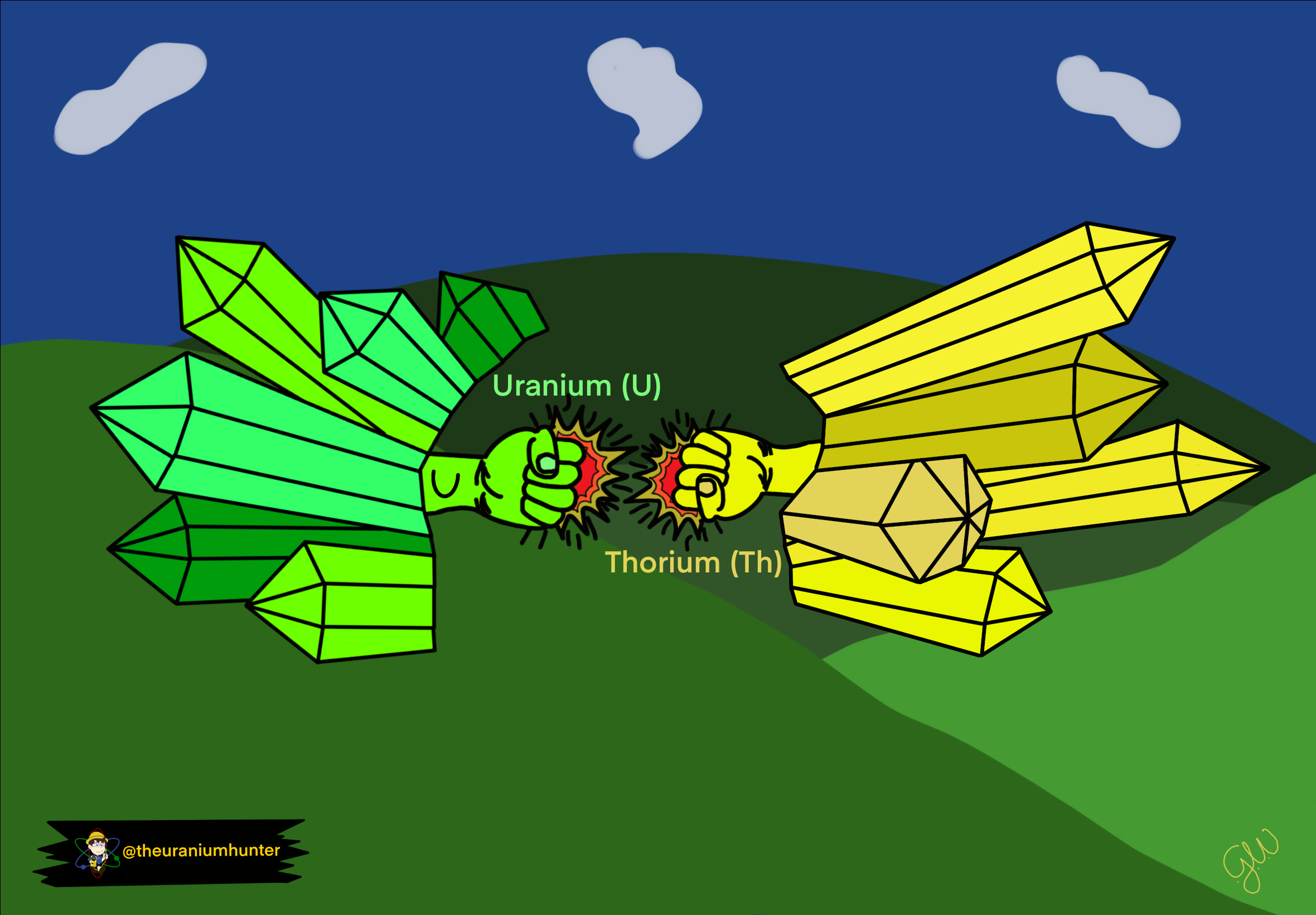
The Cheviot Hills, with their dramatic volcanic history and granite intrusions, are a fascinating destination for anyone interested in radioactive minerals. Two elements that often capture the attention of rockhounds are thorium and uranium. While both heavyweight elements are naturally occurring radioactive metals, they behave very differently in nature due to their chemistry. Let’s break down the key differences, how they occur in the Cheviot Hills, and what to look for when hunting for these intriguing elements.
Thorium vs. Uranium: The Basics
Thorium and uranium are radioactive heavy metals, but their chemical properties set them apart:
- Oxidation States: Uranium can exist in multiple oxidation states, primarily as U⁴⁺ (insoluble) and U⁶⁺ (soluble). This makes uranium mobile in oxidizing conditions, as the soluble U⁶⁺ form can be transported by groundwater. Thorium, however, almost always exists as Th⁴⁺, which is highly immobile and tends to stay put.
- Mobility: Uranium’s ability to change oxidation states makes it more mobile than thorium. During weathering, uranium can dissolve and move with groundwater, while thorium tends to remain in place, often concentrating in residual deposits.
- Mineral Associations: Uranium forms over 160 minerals, including uraninite, coffinite, and autunite. Thorium, on the other hand, has fewer primary minerals, such as thorite, uranothorite, and monazite. Both elements can also appear as trace components in minerals like zircon, apatite, and iron oxides.
- Abundance: Thorium is about three times more abundant in Earth’s crust than uranium, but their concentrations vary depending on the rock type.
Thorium and Uranium in the Cheviot Hills
The Cheviot Hills’ unique geology—featuring both granite and volcanic rocks—creates distinct environments for thorium and uranium:
- Uranium in Granite: Stream sediments from the Cheviot Granite are notably richer in uranium compared to those from the volcanic rocks (andesites). This is interesting because the parent rocks have similar uranium content, suggesting that the granite’s weathering processes release more uranium into the environment. Uranium here is often associated with iron oxides and phosphatic sediments.
- Thorium in Volcanic Areas: Thorium is more concentrated in areas like the Linhope Burn catchment and near the northern and eastern margins of the granite. Many thorium-rich samples also contain high levels of zirconium, indicating that zircon is a likely host mineral for thorium.
What to Look For When Prospecting
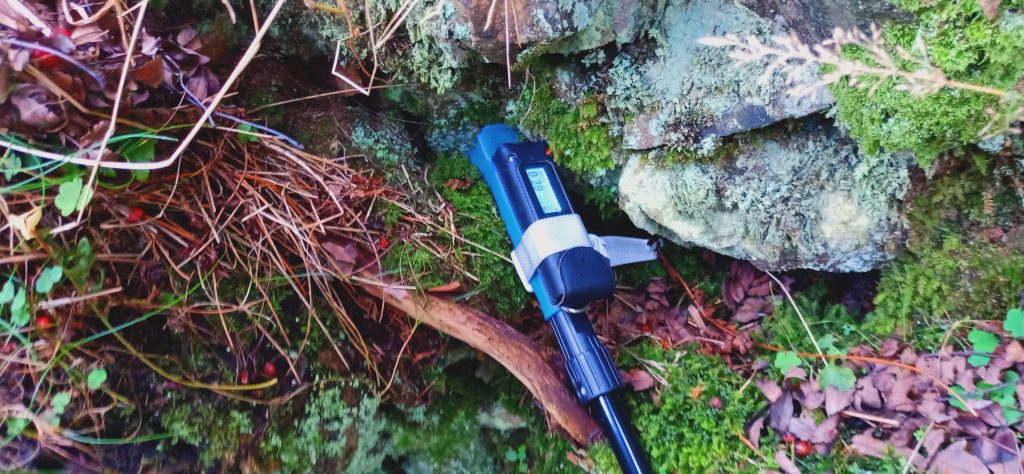
If you’re exploring the Cheviot Hills for radioactive minerals, here’s what to keep in mind:
Uranium
- Focus on granitic rocks, as they tend to release more uranium during weathering.
- Look for phosphatic sediments, black shales, and organic-rich deposits like peat, which can concentrate uranium.
- Phosphatic Sediments: These are rocks or sediments rich in phosphate minerals, such as apatite. Uranium has a strong chemical affinity for phosphate, meaning it can easily bind to these minerals and become concentrated in phosphatic deposits.
- Black Shales: These dark, fine-grained sedimentary rocks often contain high levels of organic matter. Uranium is known to adsorb onto organic material, making black shales a common host for uranium deposits.
- Organic-Rich Deposits (e.g., Peat): Peat and other organic-rich materials act like sponges for uranium. As groundwater flows through these deposits, uranium can be trapped and concentrated within the organic matter.
- Keep an eye out for iron oxide deposits, as uranium often associates with these minerals.
- Look for reddish, orange, or brown stains, crusts, or powdery masses on rocks or in stream sediments—these are telltale signs of iron oxides like hematite or goethite. A simple magnet test or streak test can help confirm their presence, and they’re often a clue to nearby uranium mineralisation.
Thorium
- Search for residual deposits and heavy minerals like zircon, monazite, and xenotime.
- Explore areas like the Linhope Burn catchment and the margins of the Cheviot Granite, where thorium concentrations are higher.
- Look for zircon-rich zones, as thorium often substitutes for zirconium in these minerals.
Alteration Zones and What to Look For
Both thorium and uranium can be redistributed by hydrothermal activity, making alteration zones a key area for prospecting. In the Cheviot Hills, tourmaline is widespread near the granite and serves as a reliable indicator of hydrothermal alteration. Tourmaline is a colorful mineral that can appear as black, green, pink, or blue crystals, often with a glassy luster and vertical striations. In rocks, it’s commonly found as elongated grains or needle-like crystals, particularly in granite or altered zones.
When exploring these areas, keep an eye out for zircon as well—a durable, heavy mineral that often appears as small, prismatic crystals with a glassy luster, typically reddish-brown, yellow, or colorless. Both minerals can signal zones where hydrothermal activity has concentrated radioactive elements like uranium and thorium, making them valuable clues for mineral hunters.
Why This Matters for Radioactive Mineral Hunters
The Cheviot Hills offer a unique opportunity to explore how geology and chemistry influence the distribution of radioactive elements. Whether you’re drawn to uranium’s mobility and diverse mineral associations or thorium’s immobility and affinity for heavy minerals, the hills provide a natural laboratory for discovery.
So, grab your Geiger counter, pack your field guide, and head to the Cheviot Hills—you might just uncover a piece of Earth’s radioactive history!
Don’t miss our upcoming companion blog, Where to Look: A Guide for Uranium and Thorium Hunters in the Cheviot Hills, for specific locations and tips to help you uncover these fascinating radioactive minerals. Happy exploring!
Have you hunted for thorium or uranium in the Cheviot Hills or elsewhere? Share your experiences or tips in the comments below—we’d love to hear your stories!