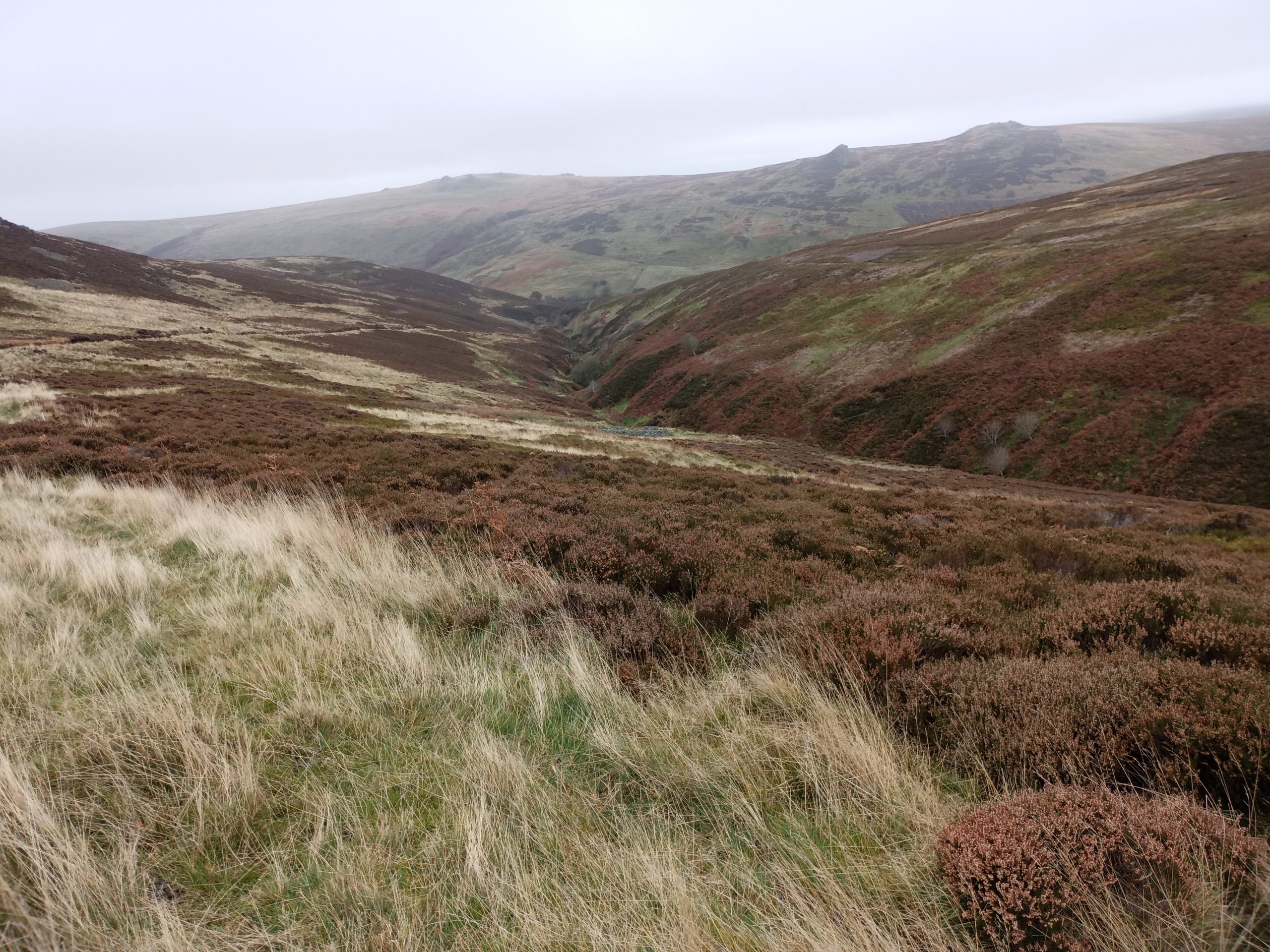
Nestled in the rugged beauty of Northumberland, the Cheviot Hills stand as one of England’s most striking landscapes. But beyond their breathtaking vistas lies a hidden story—one of ancient geological drama, radioactive minerals, and untapped mysteries. In our latest adventure, The Uranium Hunter: Searching for Radioactive Minerals in the Cheviot Hills – Harthope Valley and Hawsen Burn, we delve into the heart of this fascinating terrain to uncover its secrets.
Why the Cheviot Hills?
The Cheviot Hills are more than just a scenic wonder. Geological maps reveal a complex history of fault lines, crush zones, and ancient volcanic activity. Around 400 to 500 million years ago, the collision of two landmasses—separated by the ancient Iapetus Ocean—created the foundation of the UK and Ireland. This monumental event gave rise to the Cheviot volcano, whose eruptions and subsequent magma intrusions shaped the landscape we see today.
The Cheviot Pluton, a granite formation at the heart of the hills, is naturally enriched with uranium, making it a prime location for radioactive mineral exploration. Hydrothermal fluids, once superheated and mineral-rich, surged through cracks in the rock, depositing veins of heavy metals and minerals. Despite this geological richness, the metallic veins of the Cheviots remain largely unexplored, with the last serious research conducted over 40 years ago.
The Hunt for Radioactivity
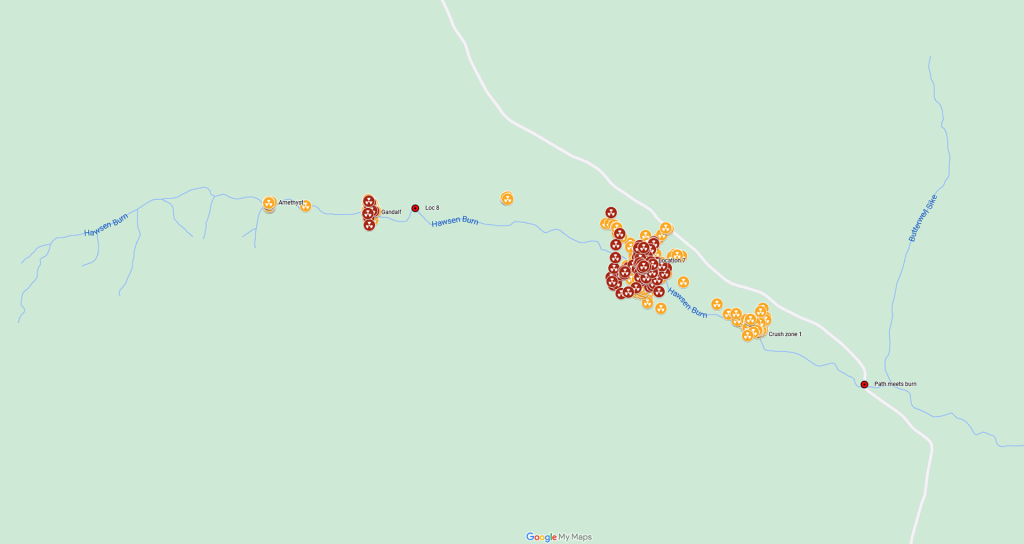
Our journey began at Hawsen Burn, a stream flowing into the Harthope Valley. Geological studies from the 1970s reported elevated uranium levels in the stream sediments, and field notes since then have hinted at potential radioactivity. Armed with a Geiger counter, geological maps, and a sense of curiosity, we set out to investigate.
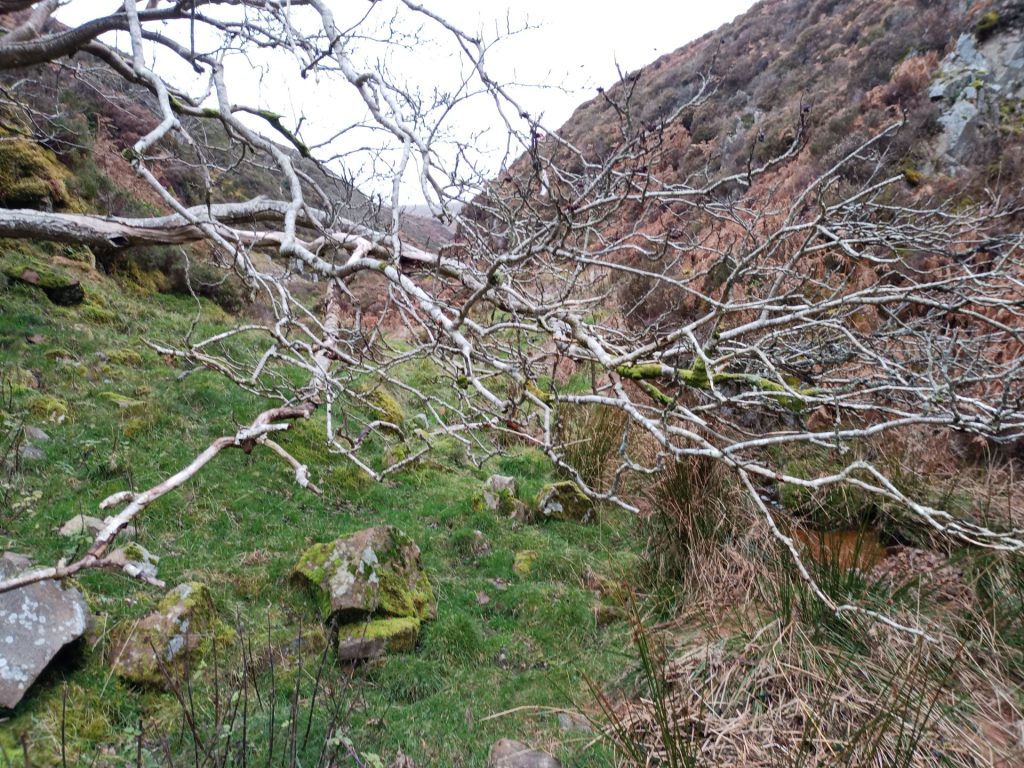
The exploration led us through stunning landscapes, from quartz-rich boulders in the burn to fault zones teeming with geological potential. At Location #7, we detected signs of radioactivity, teasing the possibility of copper deposits. One of the highlights of the trip was Gandalf’s Tree, a whimsically named spot that added a touch of magic to the adventure.
What We Found
Our expedition uncovered several intriguing features:
- Crush and fault zones: These areas, where ancient granite intruded into older lava-based rock, are hotspots for mineralisation.
- Radioactive hotspots: Locations like #7 and Gandalf’s Tree showed promising signs of radioactivity.
- Quartz boulders: Scattered throughout Hawsen Burn, these boulders are a testament to the area’s volcanic history.
While the findings were tantalising, they only scratched the surface. The Cheviots hold countless secrets, and our exploration has barely begun.
The Future of Cheviot Exploration
The Cheviot Hills are a treasure trove of geological wonders, and our adventure is far from over. By cross-referencing historical data and geological maps, we’ve identified over a dozen locations ripe for exploration. From military zones to waterfalls, the possibilities are endless.
But the journey doesn’t stop at the Cheviots. Future expeditions will take us to the rugged Highlands of Scotland and the historic landscapes of South West England, all in pursuit of one goal: finding the glow.
Join the Adventure
The Cheviot Hills are a reminder that beauty often hides the most fascinating secrets. Whether you’re a geology enthusiast, a history buff, or simply someone who loves a good adventure, there’s something for everyone in this exploration.
Watch the full video to experience the thrill of the hunt and the stunning landscapes of the Cheviot Hills. And stay tuned for more adventures as we continue our quest to uncover the mysteries of the UK’s most intriguing geological sites.
The glow is out there—let’s find it together.