(This blog accompanies our video – “How Radioactive Springs Form – Uranium Deep Underground” on YouTube)
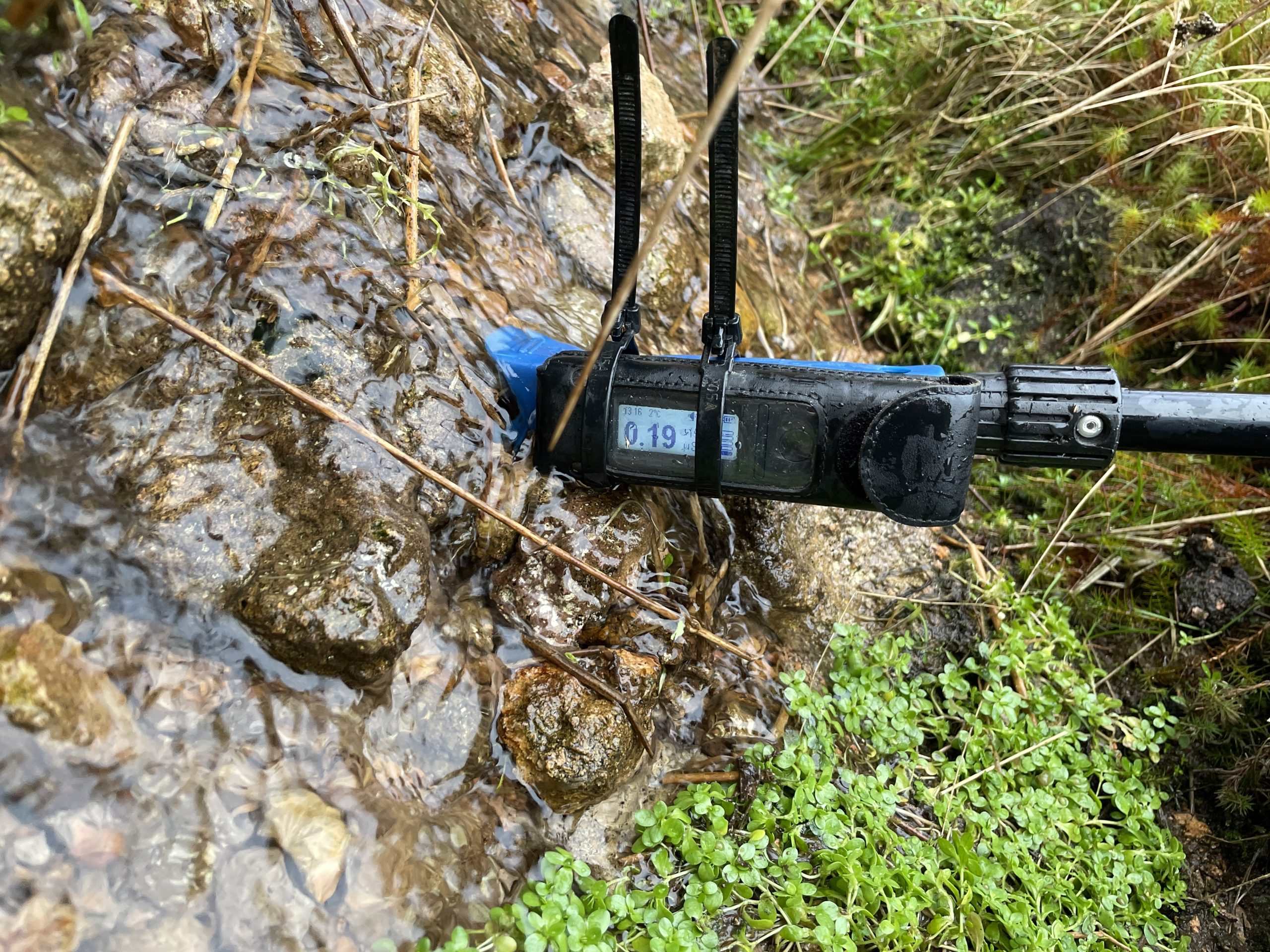
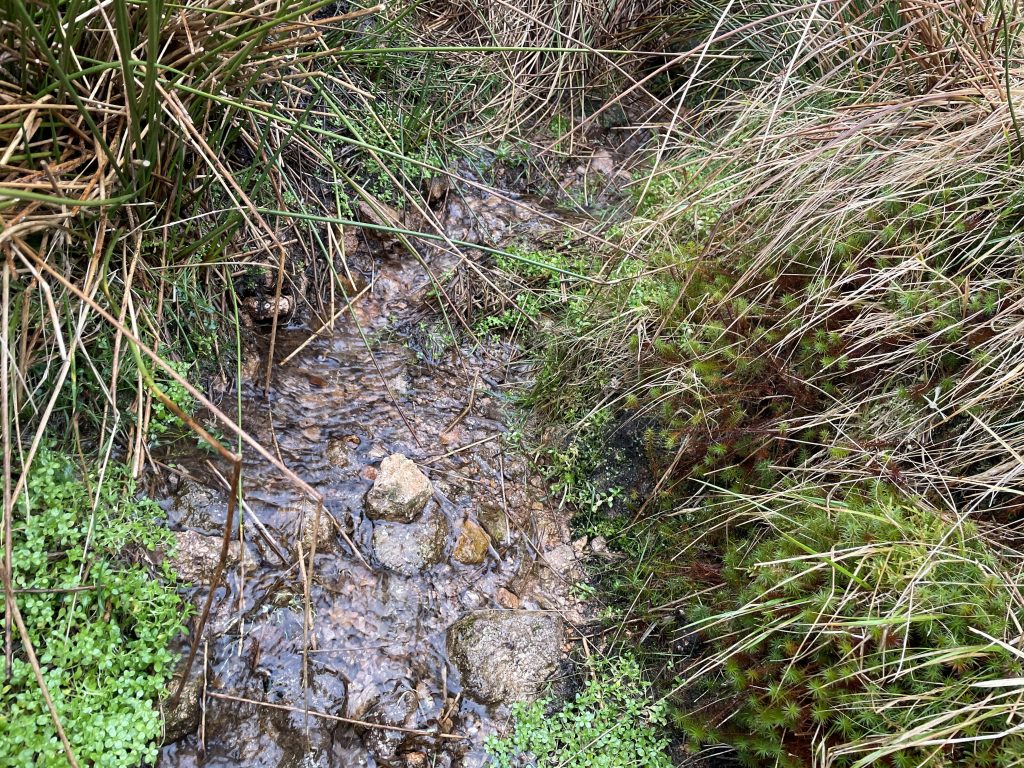
Did you know that there are radioactive radium springs in the Cheviot Hills, Northumberland? Back in 1970, Dr. Hugh Haslam’s pioneering work for the Institute of Geological Sciences (now the BGS) discovered 12 of these and published his paper. Since then, it has gathered virtual dust until we ventured out one wintry December day to take a look at 3 of them, all centered at Carlroft Burn in Upper Coquetdale.
The Crystal Prison (Deep Underground)
Underlying the Cheviot Hills is a massive body of granite. Named the Cheviot Pluton, 380 million years ago it intruded into older rock, shaping the landscape we see today. But its activity has not finished, it is still hot and active, being rich in Uranium. Ten times more concentrated than the average Uranium in the Earth’s crust, the Cheviot Pluton is our radioactive engine and the source of many of our previous discoveries.
But to power a radioactive spring, the process is much different than finding a spicy rock at the surface. For this we need to go deep underground, to the Crystal Prison.
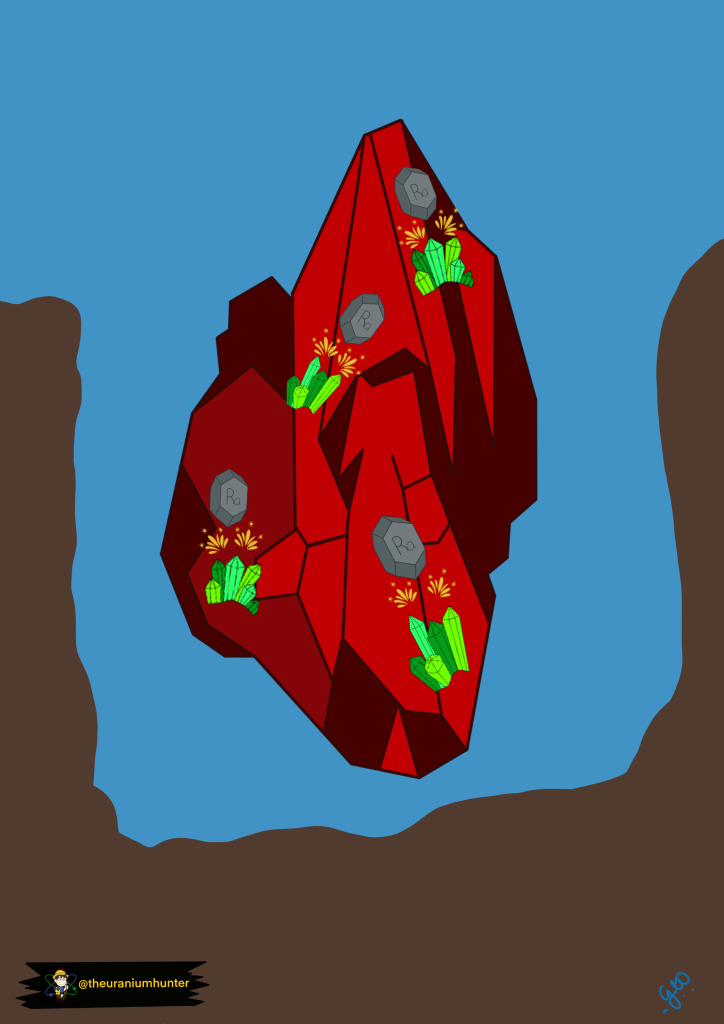
Uranium is an incompatible element. It doesn’t form minerals easily within the Cheviot granite. Instead, in the pluton, it is sequestered inside the matrix of crystal minerals such as zircon, apatite and monazite. And these crystals lie deep underground, at an average depth of 500 metres, trapping the Uranium inside their crystal prisons.
The Prison Break: Alpha Recoil
Uranium is naturally radioactive. The Uranium we find today is primordial, it was there when the Earth formed. It has a very long half-life – approximately 4.5 billion years – so it doesn’t ‘pop’ that often. However, when it does, it decays from Uranium to what are called daughter elements. Some of these exist for a fleeting moment, some hang around, but all of them too are radioactive in themselves until we finally get to Lead.
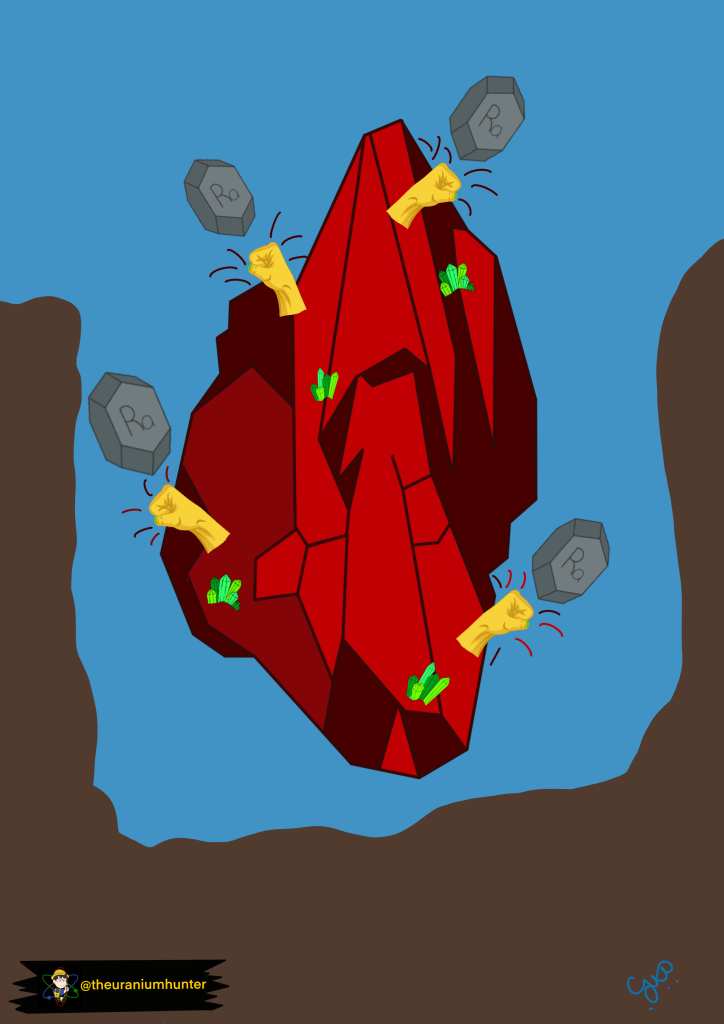
When an atom decays, it produces two things – energy and sometimes particles. An alpha particle – two protons and two neutrons – is like a battering ram. Full of kinetic energy it powers into the crystal matrix, gradually punching a hole over time. This shatters the matrix and provides an ‘out’ for Uranium’s daughters – a process called metamictisation.
Two of the daughter products – Radium and Radon – are particularly soluble in water. So once they have broken out, they are dissolved in the groundwater, ready to go on a new adventure.
The Earth’s Boiler: Radiogenic Heat
The decay of these elements not only is nature’s “get out of jail free” card, the energy also heats up the surrounding water. So not only is the groundwater rich in radium and radon, it’s also hot. As anyone who has owned a lava lamp will know, hot water rises, cold water falls. A hydrothermal convention system drives our radioactive water to the surface, constantly supplying the springs with new radioactives.
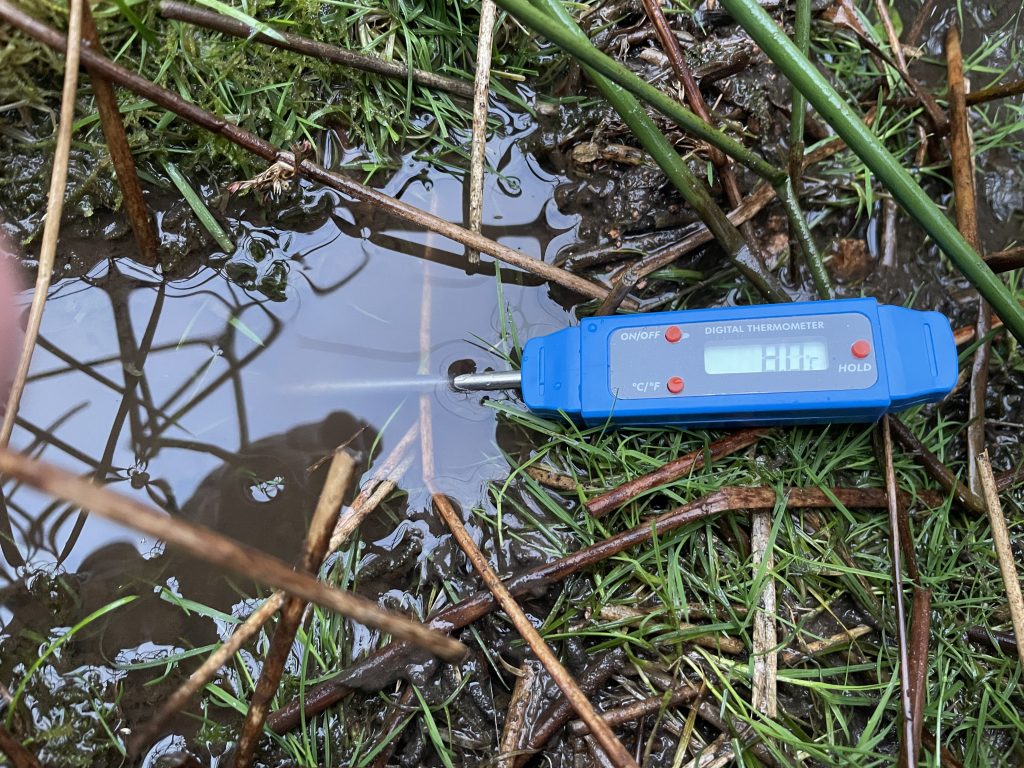
We proved this as we tested the water temperature at the springs and found them to be at least 1º higher than the main Carlcroft Burn. And of course, our Radiacode scintillator detected ample radioactivity when placed close to the springs.
The Plumbing: The Gyle-Harthope Fault (GHF)
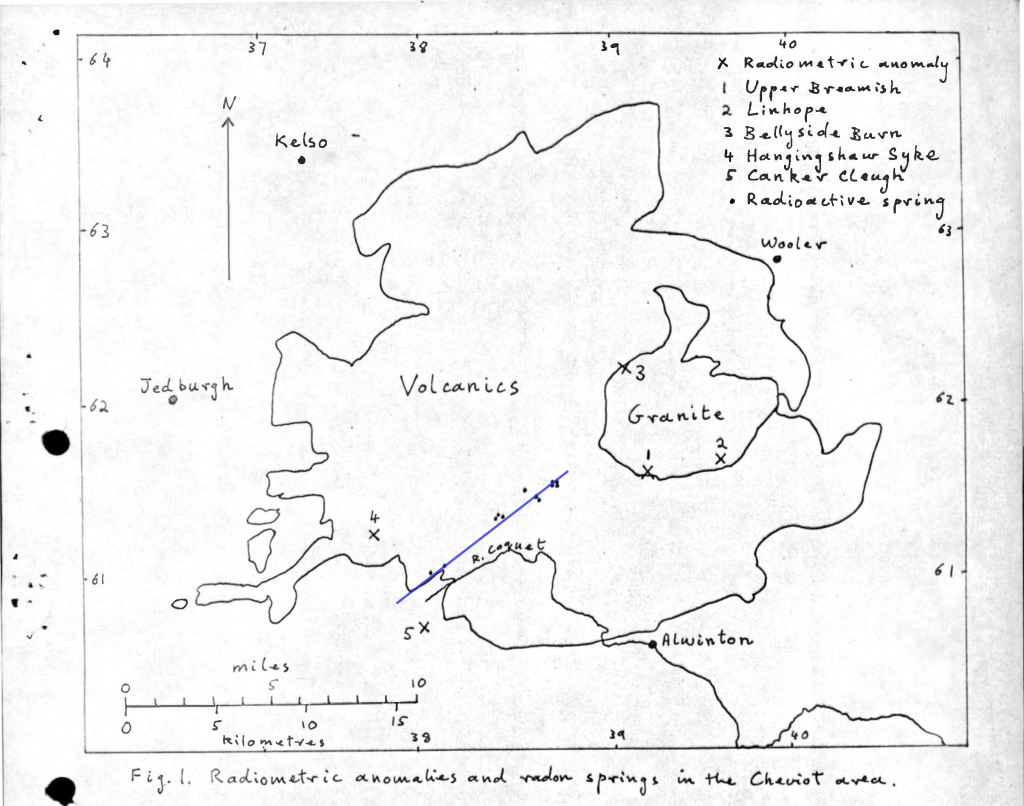
The last question was – if you look at Dr. Haslam’s map of these springs – why they are only found here and in a neat line. For the answer to that, we needed to look at the geological maps.
And sitting directly underground is the Gyle-Harthope (or Thieves-Gyle-Harthope) fault. A giant crack in the Earth’s crust, this fault – extending for 10 or more miles – is one of the major structural features of Cheviot Geology. And all of Dr. Haslam’s pins follow this fault to within a quarter of a mile.
These faults and related secondary faults branching off the GHF provide the thermal exhaust ports for our radioactive springs. The water follows the path of least resistance, up the pathways and to the surface.
Additionally, there is a secondary granite cupola (buried peak) of the pluton around Windy Gyle, to the North of Carlcroft and central to these 12 readings. This explains why here and not just all along the GHF – the water is simply closer to the surface.
One final observation is Carlcroft – the most radioactive of the springs found by Dr. Haslam – is at the junction of two rock types – the hard Andesite and the more crumbly Rhyolite. It explains why we found so much Rhyolite at the spring locations, it was part of this intriguing story of radioactivity from deep underground.
Thorium: The Bonus Element
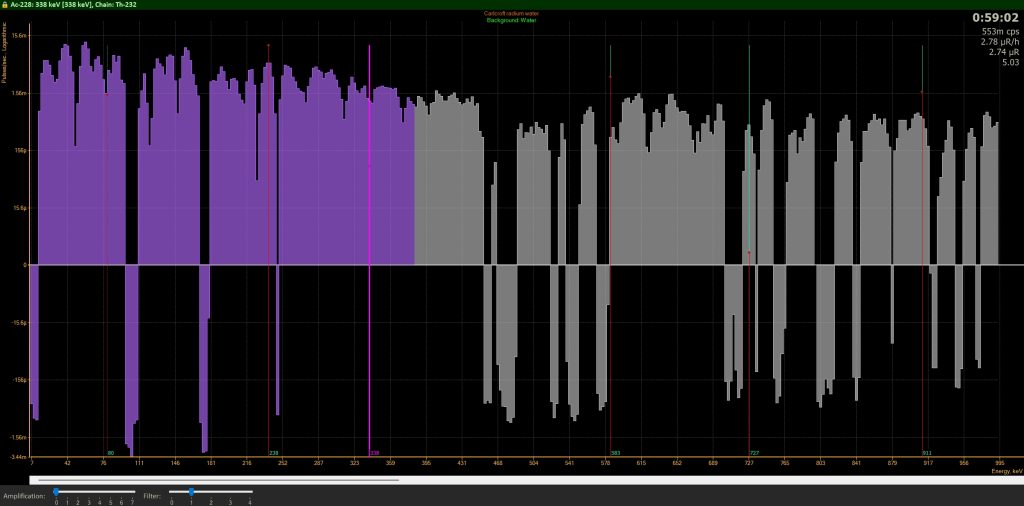
In at-home analysis of the water, I took a spectroscopic analysis of the radioactive decay from the spring water, sampled and tested the same day. I found Radium and Radon – to be expected – but I found two different flavours, or isotopes, of both.
When Uranium decays, it produces Radium-226 and Radon-222. However I found the signatures of Radium-224 and Radon-220 – also known as Thoron – as well as Actinium-228. These are the decay products not of Uranium, but the radioactive element Thorium.
Thorium is even more ‘incompatible’ than Uranium – it is totally insoluble and is captured inside these crystal prisons the same way as Uranium. And like Uranium, the daughter products punch holes and find their way to the surface.
So – not all radiums are equal. Not only did we prove the springs were radioactive, and hotter than surrounding water, we, using spectrum analysis, proved they contained Radium not only from Uranium, but also from Thorium.