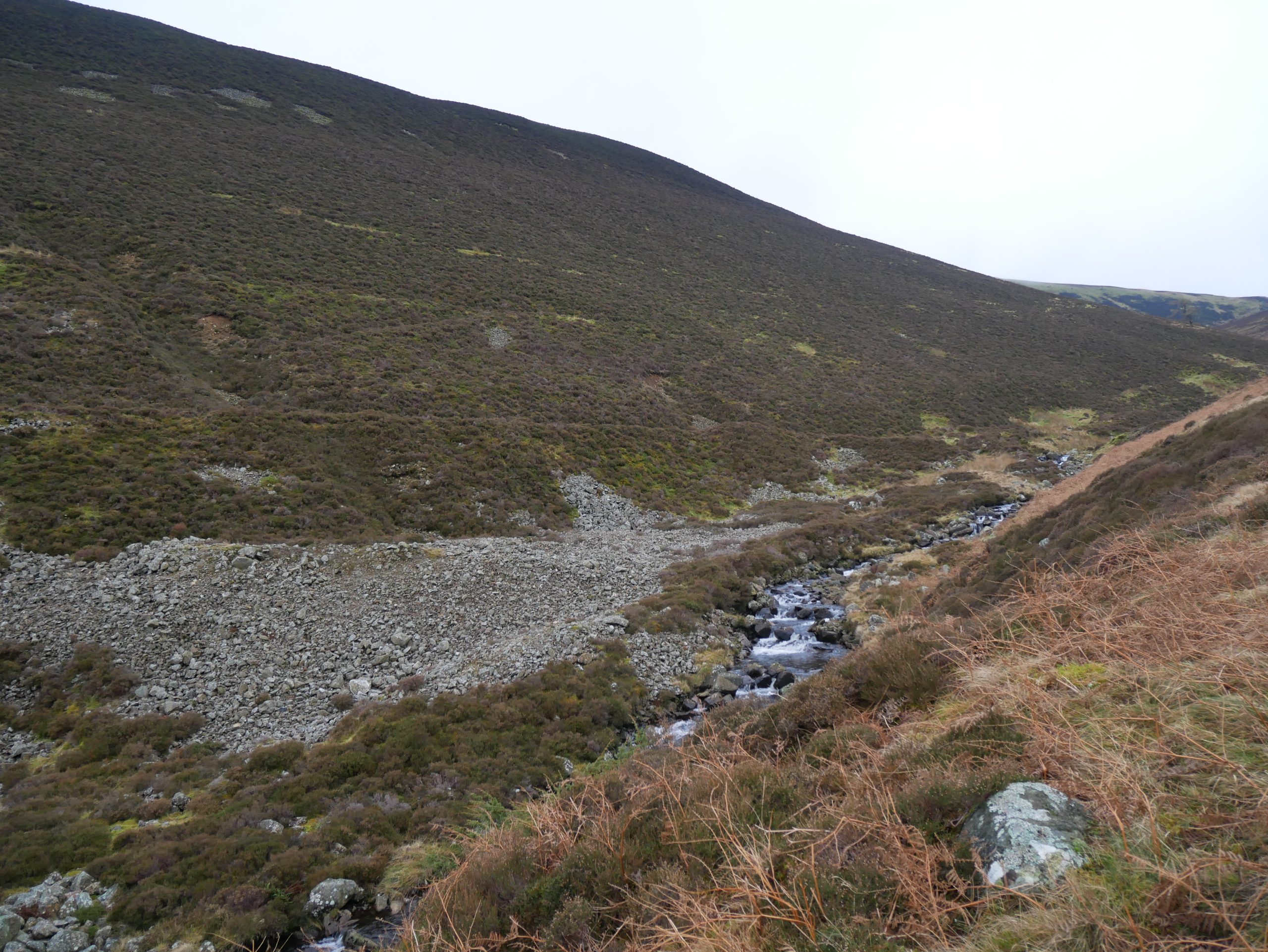
The Caldbeck Fells are a wild, desolate, and strikingly beautiful corner of the Northern Lake District. Known to geologists as a “mineralogical box of delights,” this landscape has spent centuries as a playground for industrial grit and scientific curiosity.
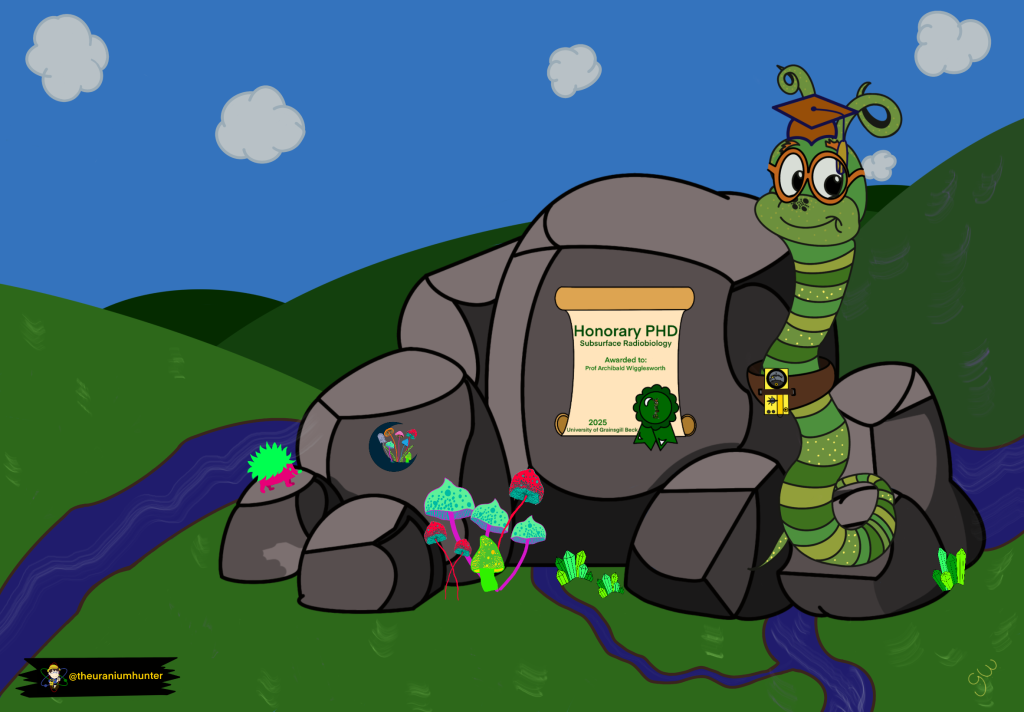
We should know – we spent three videos exploring above and below Carrock Mine. We found uranium with the help of a friendly worm, and discovered an industry frozen in time amongst the shafts and veins of Emerson and Smith.
But while the miners of old were busy hauling out lead, copper, and tungsten, a shimmering question has always hung in the mist: Is there actually gold in these hills? It’s a hot topic right now and as I’ve done hours of research on the geology of this place, I thought I’d add my tuppence-worth.
The answer is a cocktail of world-class mineral treasures, high-stakes industrial history, and one of the most audacious frauds in British mineralogy.
The Legend of Arthur Kingsbury: The Man Who “Found” Gold
If you look at the gold specimens from Roughton Gill held in the Natural History Museum, you’ll see the name Arthur Kingsbury. A respected collector in his time, Kingsbury claimed to have discovered “hackly gold” at several Lake District sites in the 1950s and 60s.
The Reveal: Modern experts have since labeled these finds as definitely fraudulent. Kingsbury was a “clever” fraudster; he would take foreign specimens – often from old collections – and pass them off as local finds to boost his reputation. He chose sites where the geology made his claims seem plausible, such as Roughton Gill. Today, serious doubt is attached to any of his unverified claims.
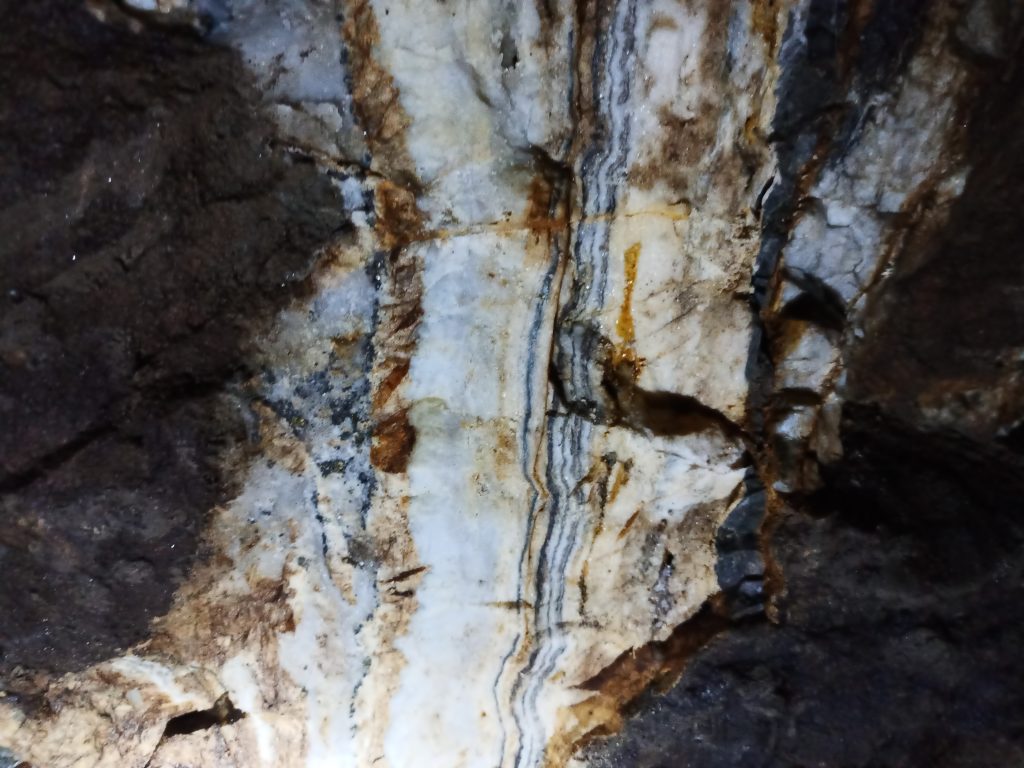
The Real Science: Contrast Kingsbury’s fake “nuggets” with reality. Legitimate surveys have detected gold, but only as microscopic traces (0.15 ppm) in stream sediments and tiny inclusions in quartz.
Carrock Mine: The Tungsten Powerhouse
Carrock Mine holds a unique title: it was the only economic tungsten mine in Britain outside of Cornwall. During the World Wars, its tungsten (wolframite and scheelite) was desperately needed for steel-making.
While there are reports of gold at Carrock and Brandy Gill, they are mere accessory minerals – rare curiosities rather than viable ore. We certainly didn’t find any shining nuggets.
The old Carrock miners did find gold – it has been documented that they “ignored the gold” as Tungsten was much more valuable to them.
A Modern Warning: If you’re exploring the area today, be cautious. Recent British Geological Survey (BGS) data found that mine water here contains arsenic levels significantly exceeding WHO safety limits. We certainly didn’t fancy drinking it.
Our Invisible Treasure: Uranium and “Greisen”
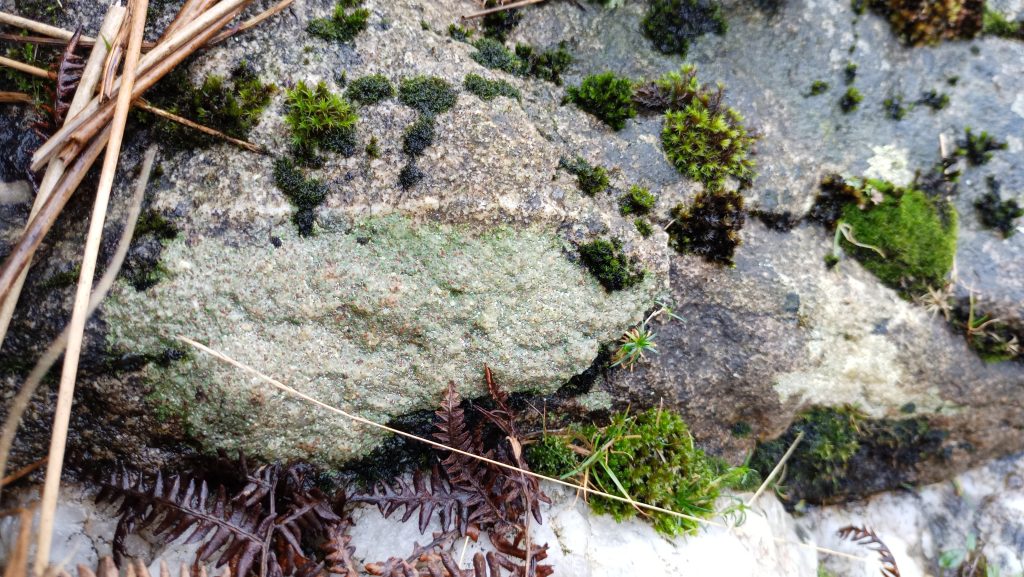
There is a “hidden radiance” beneath the fells. The Skiddaw Granite was historically altered into a rock called “greisen,” which hosts rare radioactive minerals like uraninite.
Today, scientists don’t need to dig to see it. They use gamma spectrometry to track the radioactive “pulse” of the granite buried deep beneath the fells, creating an invisible map of the landscape’s complex chemistry. And the odd vein of Uranium is there to be found, if you know where to look and have a geologist worm on hand.
The “Naughty” Case for a Gold Rush
Here’s the reveal – people do pan for gold in the area. So it is a thing. They tend to be tiny flakes of gold – “floury” according to their lingo – and take hours of careful sluicing and panning to extract even a few flakes.
Despite the fraud and the microscopic data, a speculative case can be made for undiscovered gold. Why? Because scientists have labeled certain areas as “promising” and “virtually untested”.
- The Arsenic Pathfinder: There is a 2 km wide arsenic halo west of Carrock Mine. In major gold fields globally, arsenic is the primary “pathfinder” for gold. Our (gold) money is on Arm O’Grain or Wet Swine Gill for paydirt.
- The Porphyry Connection: The mineralisation model here is similar to “porphyry copper” systems, which often host significant gold.
- Hidden at Depth: Some believe the “pay zone” for gold might simply lie deeper than the 19th-century miners ever dug.
- Analogs all Around: Gold has been found in similar ‘Trans-Suture Suite’ ranges, including the Cheviots and the Southern Uplands of Scotland. This includes the region’s only working gold mine at Cononish.
Conclusion: A Landscape of Layers
The Caldbeck Fells are a place where human greed (Kingsbury), industrial grit, and complex chemistry collide. While the “gold” of the past was often a lie, the scientific potential remains an enigma. Before you get your pick-axe out, just a note of caution. As well as the arsenic, the mineral fields around Caldbeck are heavily restricted; some areas require a permit to take samples, and specific areas are out of bounds to collectors. Always do your research first.