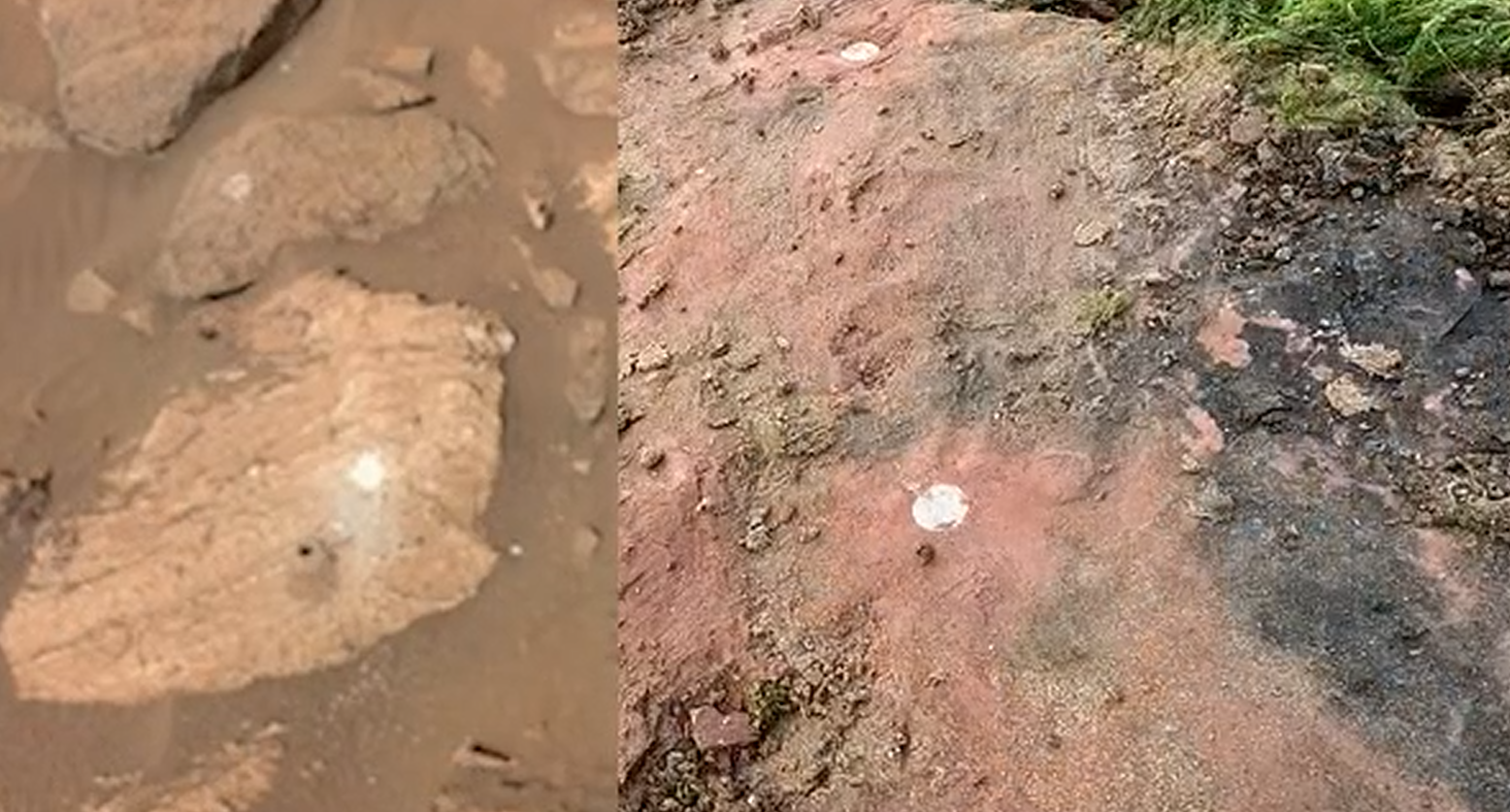
What are reduction spheroids? These metal-eating, uranium-enriching microbes from ancient Earth might hold the key to finding life on Mars. Learn how reduction spots form and why they matter for nuclear science and astrobiology.
The Mystery of the Bleached Spots
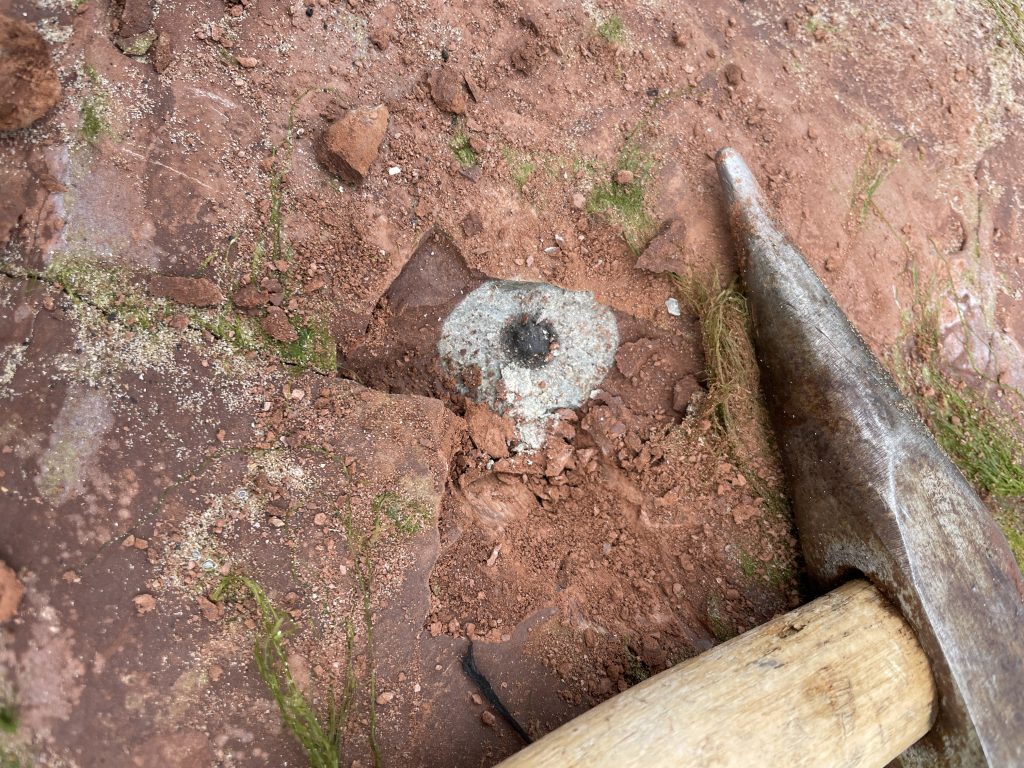
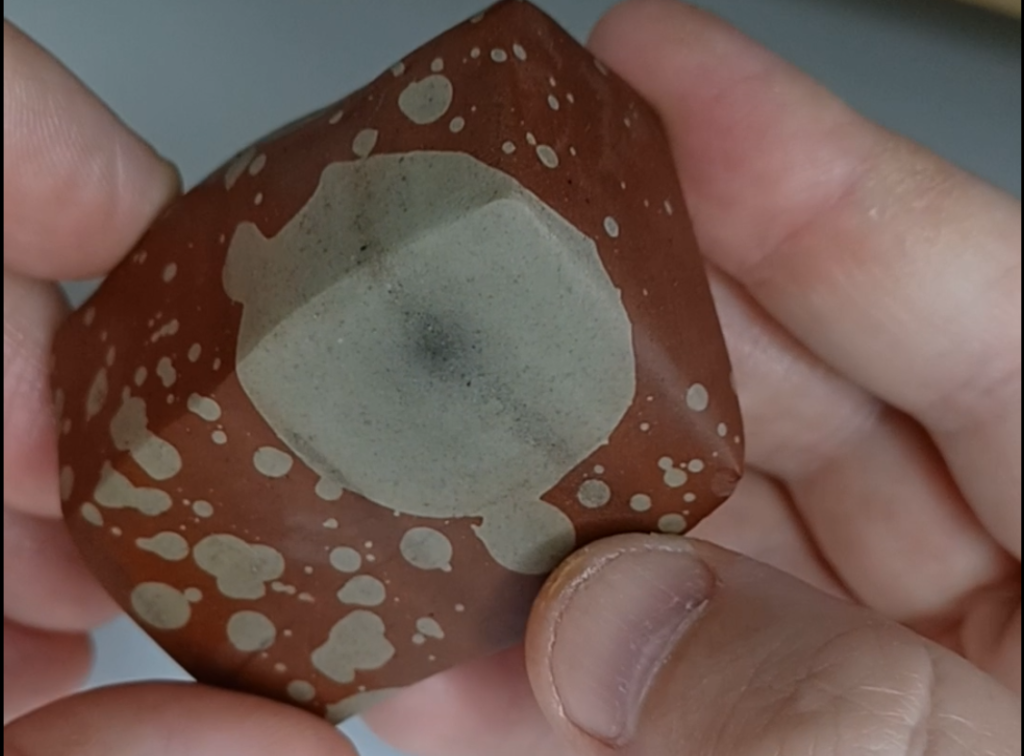
While hunting for new areas to find radioactive minerals, we stumbled across a paper about the Scottish Isle of Cumbrae. It described “radioactive reduction spheroids” – strange little grey-white spots with dark cores, packed with uranium. Naturally, we had to dig deeper. What we found was a surprising meeting of biology, chemistry, and nuclear physics – and it turns out these features are scattered across the UK.
We visited Seaton Carew in Hartlepool and North Berwick to see two very different patches of these marble-like miracles. One location was rich in greenish reduction spheroids – everywhere we looked. The other was barren and pale, with only a handful hiding in the sand. Same basic story, different geological periods. And every single one was slightly radioactive.
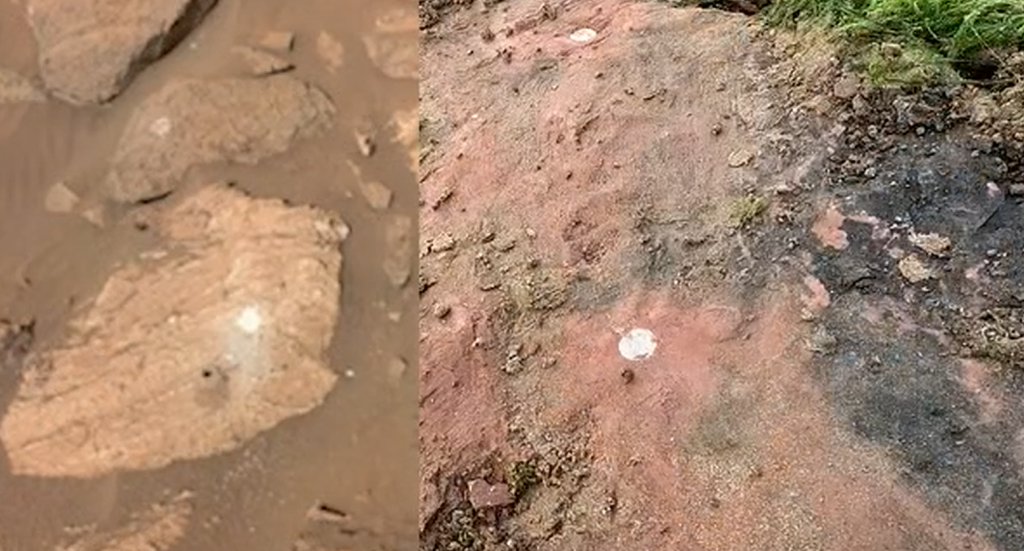
The Microscopic Alchemists: How Reduction Spots Form
Deep underground, hundreds of millions of years ago, tiny microbes lived a hard life – hot, wet, dark, and devoid of easy food. So they adapted. They learned to eat rocks. Specifically, the metals inside those rocks.
That reddish host rock is no coincidence. The red comes from iron. And those microbes ate (or metabolised) the iron – donating an electron from the hydrogen in water, reducing it and using the released energy source to live. That process stripped the iron of its redness. Reduced iron (Iron-II) is a pale greenish colour.
Millions of years later, faults shifted, landscapes eroded, and those rocks came up to the surface for us to find. Those pale, bleached circles are what we now call reduction spots – and when they’re rich in uranium, they’re reduction spheroids.
Gold, Vanadium, and Uranium: The Core’s Bounty
Those microbes didn’t stop at iron. They loved all sorts of heavy metals. They “ate” vanadium, selenium, gold, and even uranium – whatever metals they could get onto their dinner plate.
Here’s the key chemical twist. When they reduced uranium (turning Uranium-VI into insoluble Uranium-IV), the uranium became trapped and concentrated inside the core of the spheroid – creating that dark bullseye we see today.
You Said Nuclear Enrichment?
Yes – that process that costs millions, involves lengthy dangerous procedures, and grabs headlines whenever “weapons-grade uranium” is mentioned? Our friendly little microbes do it for free.
Thanks to something called enzymatic reduction, they prefer munching on the heavier Uranium-238, leaving Uranium-235 to float away. That means the ratio of U-238 to U-235 inside reduction spheroids is different from uranium you’d simply find in the ground.
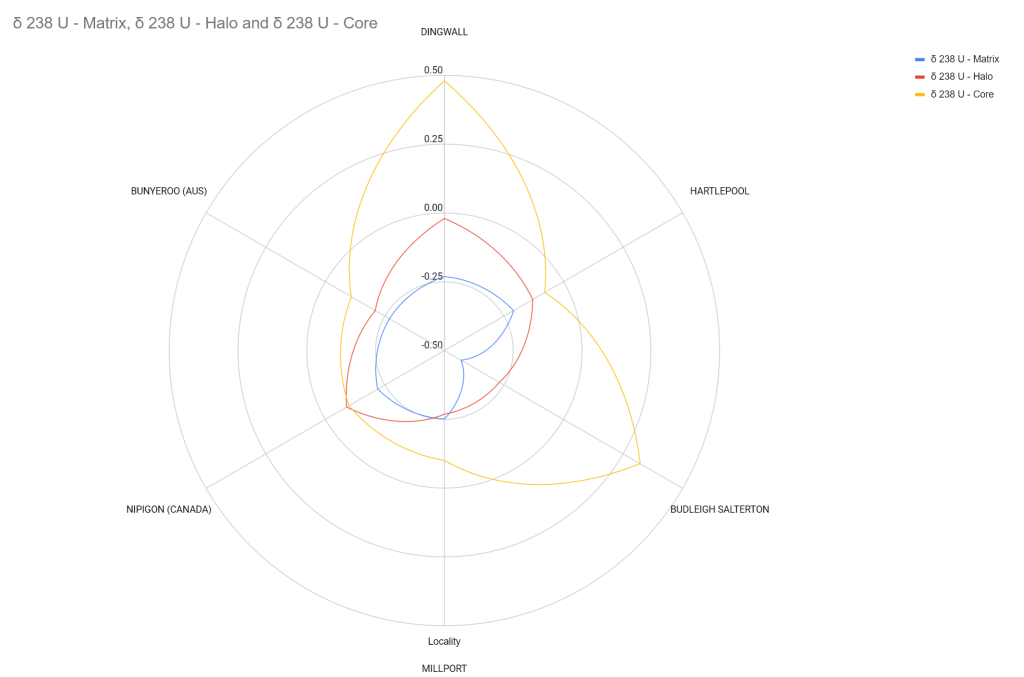
Sadly for bomb-makers, it’s the wrong direction – they want more U-235, not less. But for those of us searching for life on other planets? It’s like a neon sign.
The Mars Connection: Reduction Spots as a Biosignature
Here’s the crucial point: at low temperatures – the temperatures needed to form sandstone and mudstone – only life can change the ratio of uranium isotopes in rocks. No known chemical or geological process does this. Add the signature of reduction spots – the bleaching of iron-rich rocks – and you have a wonderful signpost for ancient life.
Now – where in the solar system is there a planet full of red, iron-rich rocks? Mars. Literally called the Red Planet, Mars has rocks that are essentially the same as those on the beaches of Hartlepool and North Berwick.
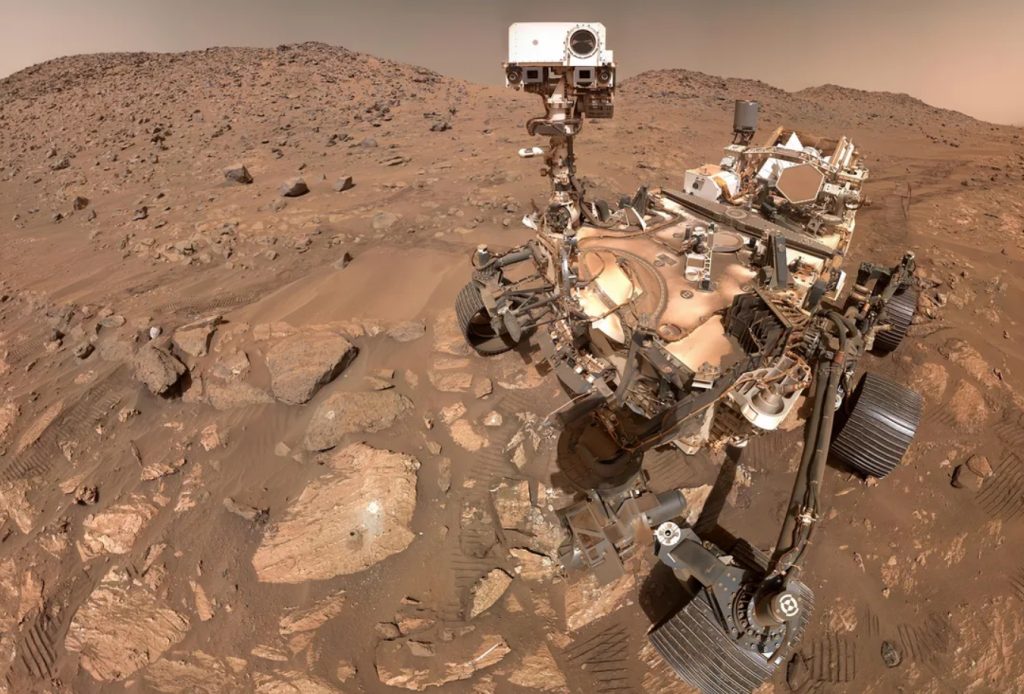
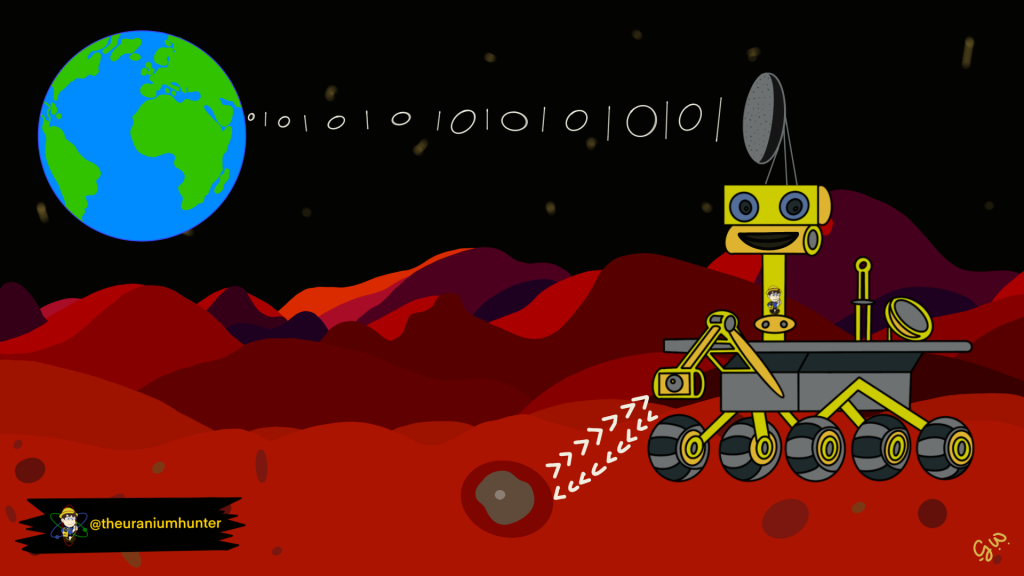
And here’s the exciting part: they’ve found similar spots on Mars. They look just like the reduction spheroids we saw at Hartlepool. If a future rover (say, “Oppy Junior”) can take an isotopic analysis and find uranium ratios out of kilter with the rest of the rock, that would be the best evidence yet that there is – or once was – life on another planet.
Final Thoughts
For a deep dive into the science, pop over to YouTube, where I walk through the clues of these amazing little microbes on the beaches of North Berwick and Hartlepool.
We’ve still yet to visit the Isle of Cumbrae – or Mars. More rockhounding adventures await!
Relevant Papers:
- McMahon, S., Hood, A. v.S., Parnell, J. & Bowden, S. — “Reduction spheroids preserve a uranium isotope record of the ancient deep continental biosphere” — 2018.
- Parnell, J., Still, J., Spinks, S. & Bellis, D. — “Gold in Devono-Carboniferous red beds of northern Britain” — 2016.
- Spinks, S. C., Parnell, J. & Still, J. W. — “Redox-controlled selenide mineralization in the Upper Old Red Sandstone” — 2014.
- Caldwell, W. G. E. & Young, G. M. — “The Cumbrae Islands: a structural Rosetta Stone in the western offshore Midland Valley of Scotland” — 2013.
- Tyrrell, G. W. — “The igneous geology of the Cumbrae Islands, Firth of Clyde” — 1918.